We help good ideas make it into production.
We work with teams that have a product, platform, internal system, or venture to ship. We help decide what should go first, build the first useful version, and stay close after launch.
Origin, model, and name.
Origin
iFoundry came from a simple frustration: too much important work gets handed from advisors to builders, and the original decision gets weaker each time it moves.
We are built to keep that from happening. The people helping make the plan stay close enough to help build it, ship it, and learn from what happens next.
Model
We stay intentionally small. The people on the work should know the problem, the tradeoffs, the release plan, and the people who will have to run it after launch.
We scope around the outcome, not the org chart. No staffing augmentation dressed up as strategy. No retainer built to keep the meter running.
Why the name fits
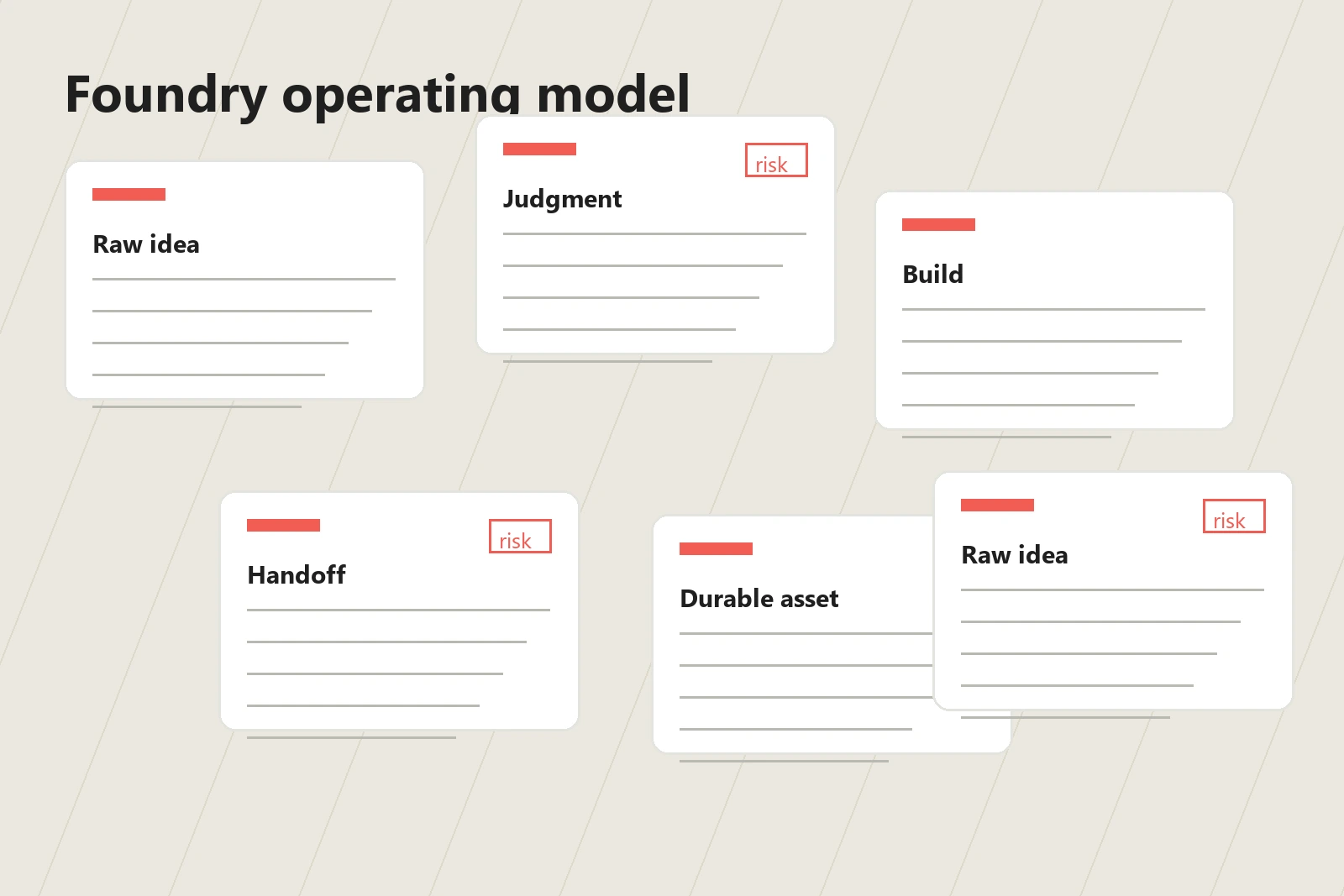
The name iFoundry comes from the foundry metaphor: a place where raw material becomes something strong enough for real use. That is the work: take the rough idea, shape it with judgment, and leave behind something the team can carry.
Most of the work sits inside systems that have to hold up in real conditions: financial data platforms, insurance processing engines, and other products under regulatory and production pressure. The work has to survive real use.
Raw material becomes something strong enough for real use.
What guides the build.
Start with the smallest durable version.
Not the biggest vision, not the full-scope roadmap. The smallest version that survives real use and teaches what comes next. Most ambitious builds fail because they try to build the second version before the first one has taught them anything.
Build systems, not one-off solutions.
A working answer to a specific problem is useful. A pattern that generates the right answer next time is durable. The work should leave the team with something composable, not just something completed.
First principles before best practices.
The structure of the problem tells you more than the most common approach. We derive the architecture from the actual constraints: data dependencies, platform seams, operating model, and how the business will run the system after we leave.
The first version is a learning instrument.
We treat launch as the beginning of understanding. Usage, support notes, and team feedback shape the next release decision. The engagement is not done when the code ships; it is done when the team knows what to build next.