The team stays close to the work.
We keep the team small enough that the people making the call are also close to the build, the launch, and the first round of learning.
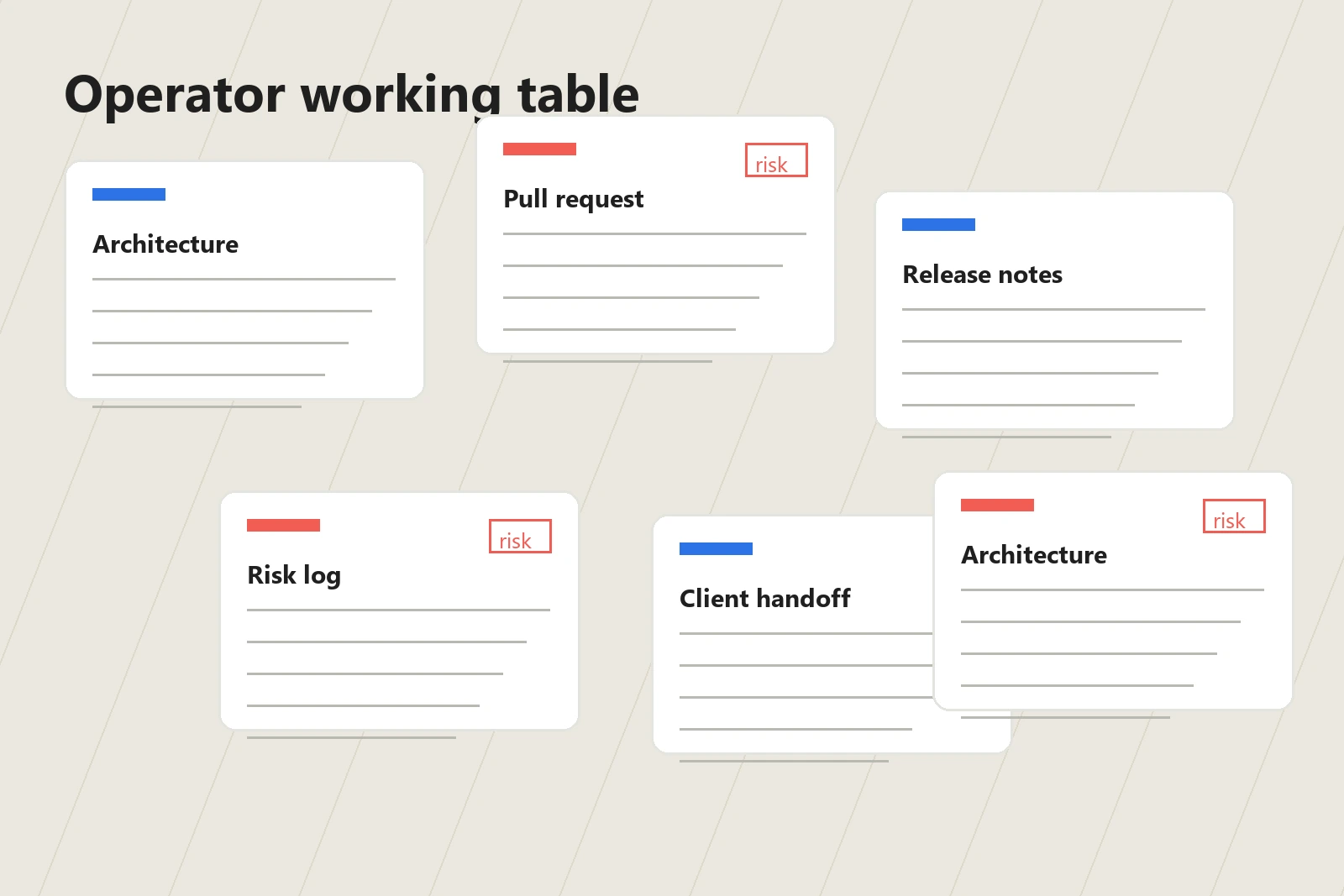
Small does not mean thin.
It means fewer handoffs, faster decisions, and less time spent explaining the same context twice.
Builders stay visible
The people making the hard calls stay visible while the work is being built.
Specialists join the work
We bring in the right designers, engineers, strategists, and operators for the problem at hand.
Small teams move faster
The team stays lean enough to make decisions quickly, share context directly, and keep momentum through release.
You meet the team before you commit.
We keep the bench small, and we do not publish bios while the team is in the work. That is deliberate. Most firms show you partners and staff you with people you have never met. We show you no one until the first conversation, and then you meet the actual builders: the people who will sit in the strategy call, write the code, and carry the launch.
What we can say in public: the people on an engagement have shipped the kind of work they are advising on, including policy-administration rebuilds, direct-to-consumer launches, production AI workflows, data platforms, and the live cutovers in between.